
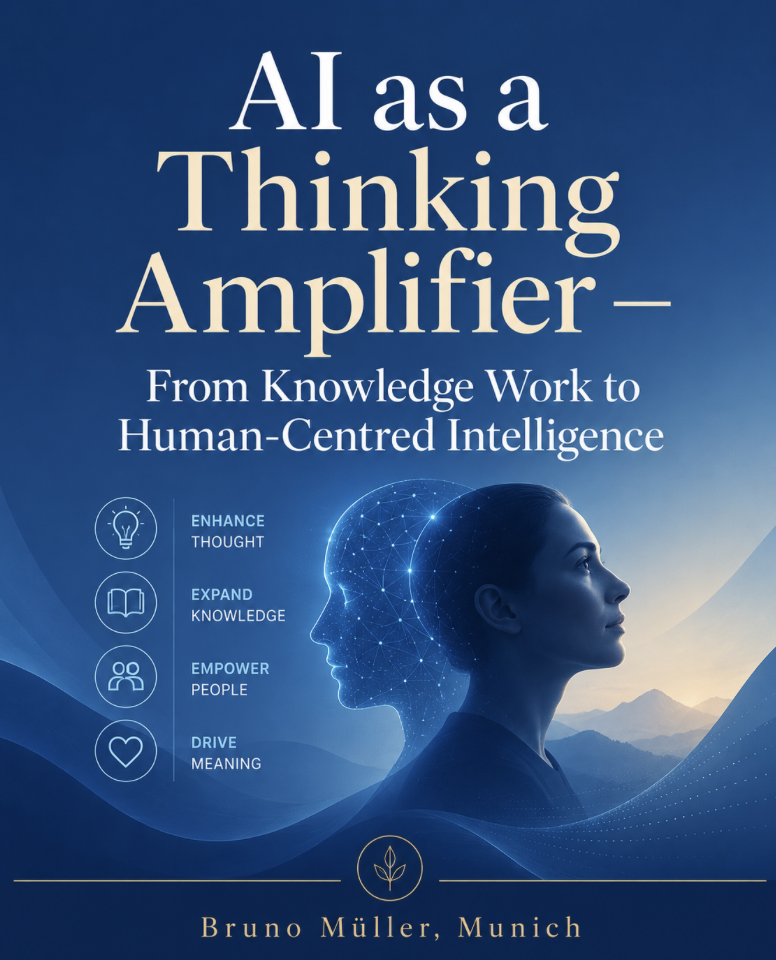
Reflections on „Human-Centred Innovation“, Society and the Next Chapter of Progress and Evolution
Key-Take-Aways:
- Technology Never Wins Alone – Humans Do
- „Human Centered Innovation“ Creates The Most Sustainable Prosperity
- The Ability To Ask Better Questions Will Become More Valuable Than Having Answers
Interest in my Key-Note/ Impulse Speech?
Please contact me (email).
For more than forty years, I have been watching and impacting technology changing the world — sometimes quietly, sometimes dramatically. From telecommunications and semiconductors to software, platforms, artificial intelligence, digital ecosystems and one lesson has become increasingly clear to me.
Technology is never just about machines—it is always about people.
Some of the most valuable lessons that shaped my thinking came from two remarkable individuals at very different stages of my life: my grandfather, Joseph Müller, who taught me timeless human values during my childhood, and Steve Jobs, whom I had the privilege of meeting in Silicon Valley in 1998.
My grandfather taught me the importance of character, curiosity, and perseverance. Steve Jobs demonstrated how bold thinking and innovation can transform entire industries.
Together with many more lessons learned, these experiences have shaped my belief that technology creates its greatest impact when it serves people.
That is the central message of my keynote: „Innovation begins with technology—but its true purpose is to improve human lives.
It is about decisions, imagination, trust, courage and the way societies organise their future.
Today, Artificial Intelligence is often described as a tool for automation, efficiency and productivity. That is true, but it is not the whole truth.
I know, the deeper potential of AI lies elsewhere.
AI can become a thinking amplifier
From my practical experience it will help us ask better questions, connect knowledge faster, recognise patterns earlier and imagine solutions that were previously hidden behind complexity. In this sense, AI is not only a technical development, it is a cultural, social and entrepreneurial turning point.
This is why one of my favourite themes is:
“KI als Denkverstärker” — AI as a Thinking Amplifier.
„Technology Must Serve People“
Human-centred innovation begins with a simple but powerful question:
How should technology help human beings become better?
The purpose of AI should not be to replace human dignity, creativity or responsibility. The purpose should be to strengthen them.
AI can support founders, teachers, doctors, engineers, students, carers, managers and entrepreneurs. It can help them structure complexity, test assumptions, prepare decisions and develop new perspectives.
- But the future will not belong to those who simply use AI faster
- The future will belong to those who use AI more wisely
- The Democratisation of Intelligence and Knowledge
For centuries, access to knowledge was limited by institutions, geography, money, language and education.
AI is beginning to change this
- Founders can test a business model within hours
- Students can explore difficult subjects with a digital tutor
- Small companies can analyse markets without a large strategy department
- Citizen can better understand economic, political and scientific developments
This is the democratisation of intelligence and knowledge.
It does not mean that everyone automatically becomes wise. But it does mean that many more people can participate in thinking, creating and solving.
That is a historic shift.
Europe in Transition
Europe is standing at an important crossroads. Our societies are ageing. Our infrastructure needs renewal. Our energy systems are under pressure. Our prosperity model is being challenged by global platform companies from the United States, China and an increasing number of countries across the globe.
Europe offers a wide range of opportunities.
Europe can build a model of AI that combines innovation with responsibility, productivity with social cohesion and technological progress with human values.
- Europe must not only regulate AI
- Europe must learn to create with AI
This applies to industrial AI, healthcare, education, energy systems, infrastructure, social innovation and the future of work. If Europe wants to remain prosperous, it must become more entrepreneurial, more experimental and more courageous.
Learning to Think in Platforms
One of the great lessons of recent decades is that value increasingly emerges through platforms.
Platforms connect people, data, services, markets and trust. But platform thinking is not only about large digital corporations. It is a new way of understanding value creation.
The old question was:
What product do we sell?
The new question is:
What ecosystem will we enable?
This is highly relevant for startups, spin-offs and young companies. In the age of AI, future platforms will not only connect users. They will connect knowledge, workflows, decisions, resources and intelligent agents.
- Companies of the future will not only build products
- They will build environments (ecosystems) where others can create value
Startup Developments:
From Inspiration to Real Value
Startups often begin with inspiration, passion and a strong story, as I am experiencing in my lectures about entrepreneurship at universities. But they survive through clarity, validation and execution.
AI can support founders in many ways. It can help them test assumptions, understand customers, improve positioning, prepare due diligence, build financial scenarios and recognise weak signals and risks earlier.
AI cannot:
- replace courage
- replace responsibility
- replace entrepreneurial judgement
The founder of the future will not simply be a visionary
The founder of the future will be a curator of possibilities
Curator of possibilities will combine human intuition with AI-supported analysis, market understanding with ethical responsibility and speed with reflection.
Inspritation to Real Value:
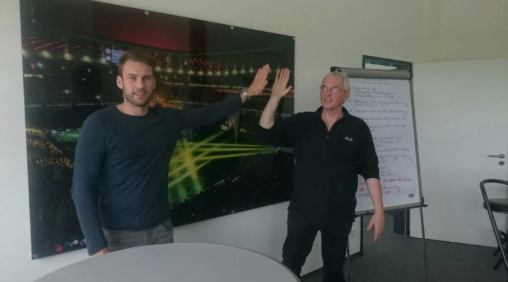
Materialrest24 was sold (Exit) 6 years after CoCreation
Ageing Populations:
Challenge and Innovation Field
One of the most underestimated developments of the coming decades is the ageing of populations.
Europe, Japan, China and many other regions will face increasing pressure on healthcare systems, pensions, care structures and labour markets.
- Ageing is not only a problem
- It is also one of the greatest innovation fields of our time
We need new models of elderly care, neighbourhood support, digital health, assisted living, smart homes, social platforms and intergenerational cooperation, like our startup – The OneFamily.uno Ecosystem
AI can help detect needs earlier, coordinate support better and reduce loneliness. It can support carers, families, doctors and communities.
„OneFamily.uno“ uses intelligence to build a more caring society.
Energy, Infrastructure and Prosperity
Prosperity depends on infrastructure.
Without energy, water, mobility, housing, communication and digital networks, modern societies cannot function.
AI will become a key technology for managing energy demand, optimising grids, predicting infrastructure risks, improving logistics and reducing waste.
In a world of growing power demand, especially through AI data centres, energy intelligence will become as important as energy production itself.
The future of prosperity will depend on whether we can combine technological ambition with sustainable infrastructure.
Progress will need more than innovation.
It will need resilience.
Social Innovation:
The Forgotten Growth Engine
When people speak about innovation, they often think of products, patents, markets and technology.
But some of the most important innovations are social.
How do we organise care?
How do we build trust?
How do we support families?
How do we integrate older people?
How do we help young people find purpose?
How do we rebuild communities in a digital age?
„OneFamily.uno“ and AI can help us design new social operating systems. But the purpose must remain human.
- The best innovation is not always the one that scales fastest
- Sometimes the best innovation is the one that restores belongings

The Future of Work:
From Knowledge Worker to Curator of Ideas
For decades, the knowledge worker was the symbol of modern productivity.
People were paid to collect information, analyse it, prepare documents, create presentations and make recommendations.
- AI is changing this dramatically
In future, much of the mechanical work of knowledge production will be supported by intelligent systems. This does not make human thinking irrelevant, it makes human judgement more important.
- The future, professional will increasingly become a curator of ideas
This means selecting the right questions, connecting different fields, interpreting results, challenging assumptions and turning information into meaningful action.
- AI can produce options.
- Humans must create meaning.
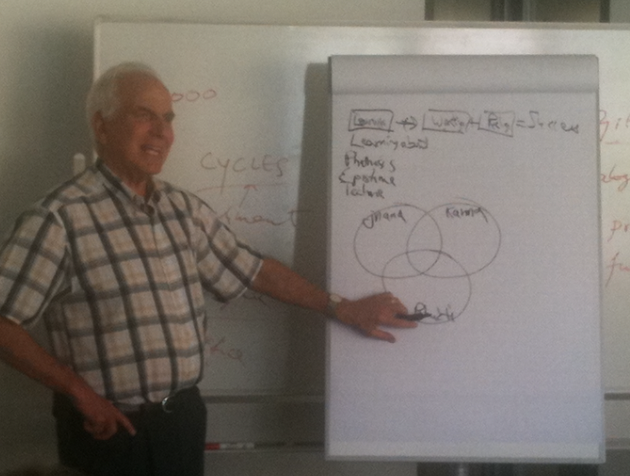
Prof. Dr. Charles Savage, „Co-Creating future“ in his famous ZUKUNFTSWORKSHOP
AI Changes Thinking Itself
Perhaps the most fascinating effect of AI is that it changes how we think.
When used well, AI becomes a dialogue partner. It helps us clarify our thoughts, recognise blind spots, explore alternative perspectives and challenge weak arguments.
- It allows us to simulate strategies, stories, risks and futures
- That is why I do not see AI merely as a tool
I see it as a mirror, a sparring partner and a thinking amplifier.
The quality of the answer depends on the quality of the question. And the quality of the question depends on the maturity of the thinker.
What Companies Can Learn from Children and Animals
In my experience, companies often become too complicated.
They create structures, silos, politics, control systems and internal languages that distance them from reality.
Children and animals can teach companies powerful lessons.
Children ask simple questions. They are curious, direct and open to learning. They explore without needing perfect certainty. They are not afraid to ask “why?”
Animals observe carefully. They sense atmosphere, trust, danger and belonging. They react to authenticity, not to PowerPoint slides. They remind us that communication is not only verbal. It is also emotional, relational and behavioural.
Companies that want to innovate should relearn curiosity, attention and instinct.
- They should ask more like children.
They should observe more like animals.
And they should decide more like responsible adults
Bruno’s Reflections: Lessons from 40+ Years
First of all, I’d like to take this opportunity to thank our grandsons Yves and Tristan, of course our dog Susi and friends of my inner circle.
My ecosystem teaches me something new every day.
When I look back over more than forty years of technological change, I think about many people I have met around the globe living in every culture. Especially I like to highlight my grandfather Joseph.
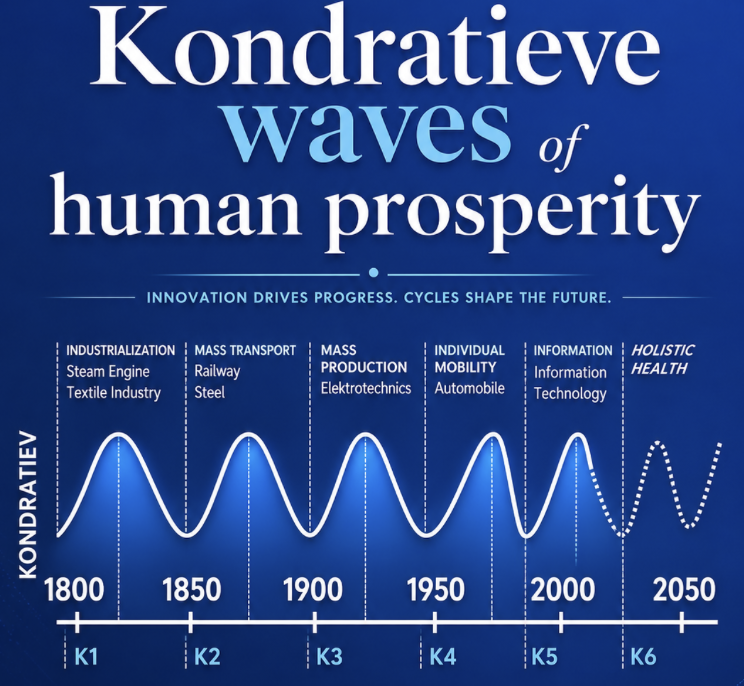
My grandfather experienced how horse-based logistics lost its relevance when motorised logistics emerged. His story is a reminder to me that every technological wave changes livelihoods, industries and identities. (Kondratieff waves (or K-waves) are 40 to 60-year economic cycles driven by technological innovations)

Every wave creates winners and losers. But the decisive factor is rarely technology alone. It is the ability to learn, adapt and build trust.
From my own journey, several lessons remain clear.
- First, technological change is unavoidable, but human response is a choice
- Second, complexity always increases. Therefore, the ability to simplify becomes a strategic advantage
- Third, platforms change power structures. Those who control access, data and ecosystems often control the future
- Fourth, innovation without humanity creates resistance
- Humanity without innovation creates stagnation, we need both
- Fifth, the most important startup often lies in our own hands: our willingness to learn, to question old assumptions and to develop ourselves
The Motivational Lesson
We should not fear AI as the end of human thinking.
We should understand AI as an invitation to think better.
- Better about work, society, ageing, energy, platforms, entrepreneurship, Europe’s future
- Better about ourselves
- AI will challenge us, but it can also empower us
It can help us move from information overload to orientation.
- From isolated knowledge to connected intelligence
- From passive consumption to active creation
- From fear of the future to responsibility for the future
Conclusion:
AI as a Human Responsibility
AI as a thinking amplifier is not a technical slogan.
- It is a human responsibility
- It asks us to use artificial intelligence not only to become faster, but to become wiser. Not only to automate work, but to elevate thinking. Not only to build companies, but to strengthen society
- The future will be shaped by those who combine intelligence with empathy, platforms with purpose, entrepreneurship with responsibility and technology with human dignity
For me, this is the real promise of AI:
- Not machines replacing humans
- But humans thinking, creating and caring at a higher level
- AI will not define the future alone
The future will be defined by the people, who learn how to think and co-create with AI.
For deep reflections:
- The Unseen Side of Steve Jobs about connecting strategic suppliers in (digitally organized) industrial ecosystems
- OneFamily.uno connecting family members and resources in family (digitally organized) ecosystems
- Kondratieff waves (40 to 60-year economic cycles) driven by technological innovations
- OmegaLambdaTec Transformation through intelligent Data Science Solutions.
- Vive-Tech in Paris 2026
Frank Thelen (Visiting Report in LinkedIn)
Your curiosity is the beginning of every good conversation.
Please contact me: email

SEO keywords: AI as a thinking amplifier, human-centred innovation, AI and society, future of work, platform economy, startup development, social innovation, ageing population, democratisation of knowledge, AI in Europe, knowledge worker, curator of ideas, artificial intelligence and prosperity, AI and infrastructure, Bruno Müller reflections maxxelup, OneFamily.uno